Wednesday, 3 June 2015

Finished animation and Evaluation

Our final animation.

What have I learnt?

Previous to this project I knew very little about how animation was made, and had no experience in creating it myself. I have learnt how to develop a story using storyboards and concept art. I have learned many techniques for creating animation - found object, stop motion, silhouette puppets, shadows, drawn. I would have liked to have experimented with clay as well but didn't get chance.

What new skills have I acquired?

I think I have learned how to work in a team better - as well as the animation techniques listed above.

What have I learnt from my experiments?

I have learnt how using a different material, technique, colour or lighting can effect the mood of an animation.

In creating my animation how have I applied my new knowledge and skills?

Through our experiments we decided to use stop motion with hand drawn images and some digital drawings for the characters.

How did I develop my ideas to explore my themes?

By collecting primary and secondary research of buildings, people and phones.

Have I been inspired by other animators?

Ping (creator of Last Breath), students who created Rainy Town. Studio Ghibli.

What would I develop or change?

As the majority of the animation is stop motion through taking photos, there are some messy parts where the floor/table around the background is seen, or where the movement is jolty. This was difficult to avoid, but I think we could have made it look smoother in this way, if we had more time.

How can I make use of my new knowledge and skills in my future work?

I found stop motion animation quite frustrating as it was very time consuming to make - so I'm unsure if I will use it again in the future. However I will make use of storyboards and concept art to develop and plan out my ideas in future.

Scenes

Summary - The main theme of our story is the idea of phones and social media being like a drug that people are addicted to, and people are constantly 'upgrading' to a new phone, i.e a stronger drug. This keeps them distracted from the dismal world around them - shown by the fact that the colours of the city are dark and grey. However, in an attempt to control his addiction, the main character hasn't upgraded like everyone else, and so his phone breaks, leaving him without the drug. The question is, will he choose to stay in the real world, or go back to the drug like everyone else?

1st scene - made with the shadows, filmed with a camera on a tripod, see previous posts. Begins in a dark city.
2nd scene - on photoshop Tomaz slowly zoomed in to the photograph and took a screenshot each time, then put them together on movie maker. Focus comes in on the main character.

https://www.youtube.com/watch?v=000iCuXqv_Y

3rd scene - again using movie maker, Tomaz put the frames of the eyes I drew together to make it look like they are blinking. This is the character "waking up", coming out of the haze from the drug.

https://www.youtube.com/watch?v=7sOPcnpndcI

4th scene - using Su's painted background of the pavement, Hannah's painted hand and phone, I layered them and took photos slowly zooming in. Tomaz then put these together, and added in phone screens Su had drawn. This is showing the character looking down to see the phone in his hand, and that it's breaking, hence him "waking up".

https://www.youtube.com/watch?v=AbY90bDAdJw

5th scene - Tomaz put together the frames of the eyes I drew, to show them looking down the phone.

https://www.youtube.com/watch?v=g285VWgLQoI

6th scene - I took photos of the same piece from scene 4, but panning down to show the character looking down and noticing that the phone is connected to his arm with a wire, like it's a drug.

https://www.youtube.com/watch?v=g285VWgLQoI

7th scene - Tomaz put together the frames of the eyes I drew, to show them looking up at the city.

https://www.youtube.com/watch?v=xX89z8HurRY

8th scene - I took photos of a city background that Hannah painted, which Tomaz put together to show the character looking up at the buildings, then noticing the symbols on parts of the buildings, suggesting that this 'drug'/the phones are a commercial/mind control thing. Like everyone is addicted.

https://www.youtube.com/watch?v=0yCGlwomcT0

9th scene - using photoshop and movie maker, Tomaz moved a black block slowly down and up over the city, and then did frames slowly zooming in towards a road in the city. This shows the character blinking, and then running forward through the city, away from the people.

https://www.youtube.com/watch?v=S4gkDBG3c6k

10th scene - Tomaz overlapped my drawing of the man's face on top of Su's painted background of a wall, and took frames of the face moving left and right, whilst the background slowly moved to the left. This shows the man running through the streets, notice that the posters have the same symbol on as in the city scene.

https://www.youtube.com/watch?v=1jkDGcGOfjA

11th scene - Same method as above, but he added the alleyway and dead body I drew onto the end - to show the man has come across the alleyway.

https://www.youtube.com/watch?v=gSWNkCQ7y48

12th scene - Tomaz then did frames slowly zooming into the dead body, focusing on the phone in it's hand. This shows the man walking down the alleyway towards the body, and noticing that they have a functioning phone still attached to them. It suggests they 'overdosed' on the drug.

https://www.youtube.com/watch?v=ByEBHFWt8lc

13th scene - I took photos of Su's background of another pavement, and Hannah's painted hand, with Su's modern phone - Tomaz then took frames moving and rotating it, and added Su's phone screens to look like it was flashing. This shows the man walking closer and turning to see the dead body's phone, with the 'drug' symbol flashing on it, encouraging him to use it, as his own phone is broken.

https://www.youtube.com/watch?v=6dwt8rTm21g

14th scene - Using Hannah's painted hands and old phone, Su's phone and background. Tomaz erased the backgrounds of the hands so they were separate, and flipped on of them so they looked like a right and left hand - to show that the character is looking down at his own hands holding his old phone, and the dead man's phone. He also edited in Su's screens onto the dead man's phone to flash "UPGRADE", as if to tempt the main character. He then took frames of the hands slowly moving together, like the man has just picked up the phones. He then slowly moved an black block down over the whole frame to show the man blinking. The main character holds in his hands his old, broken phone, showing his chance to be free from the drug, and in his other the dead man's upgraded phone, showing his chance to go back to the addiction and cut himself off from the world again.

https://www.youtube.com/watch?v=cB4V4MFr8So

15th scene - Tomaz put together the frames I drew to show the eyes opening. This represents that the man did choose to go back to the drug, so he is back in the 'haze', which is why his pupils are so big. The end.

https://www.youtube.com/watch?v=r5Zu--2LbKc

Saturday, 2 May 2015

Digital


On my computer I used a drawing tablet to create some frames for the animation. Several scenes were planned to involve cutting to show the character's eyes - to show him blinking, looking around etc. For the first and last scene where he opens his eyes I drew the above, I tried to make it as many frames as I could so it would be smooth. At this stage I was unsure what colour his eyes would be, so I did both.


When he opens his eyes, as he comes out of the addiction and the 'drug' drains out of his body, his pupils shrink and focus. Again at this point we weren't sure if he would be drawing white on black, or black on white - so I just inverted it so we would have both.

In a later scene, the character is running away from the other people through the streets. This is from a side view, so based on a photo I drew it very simply, with a blank background so Tomaz could edit it in.

At the end the character comes across an alleyway with a dead body in it. For this I just drew around the outline of the photo and then coloured it in grey scale. Tomaz then scaled it down the fit the alleyway.

Based on the above sketch, I drew the alleyway the dead body is in, it's supposed to look abandoned and grimy, with the posters on the wall showing the symbol for the 'drug'. I had limited time to do this so I think it could have been better.


Concept art


Dead body in the alleyway. This was drawn from the photo of Tomaz modelling. It was difficult to get the perspective and size right, so none of the sketch turned out properly. We decided to fix it later digitally.

Tomaz's concept for the alleyway, better perspective.

My concept for how the city background could look. We were originally going to have a scene showing the crowd of people in the city, but didn't use it in the end.

Su's concepts of the city, the floor background, posters on the walls. We ended up using most of these to create the backgrounds.

Some eyes I drew based on Su's. We wanted them to be quite simple to contrast the detailed background.

Hannah and Su worked together to create concepts for hands, symbols and phones - since we knew several of our scenes would be looking down at the hands.

Silhouette videos

We decided we wanted our first scene to be made using silhouttes, similar to Lottie Reiniger except we used the shadows instead. We set up in the dark room with a big piece of white paper as the screen, and cardboard cutouts of buildings and people of different sizes. We attached pins to the bottom of the cutouts so they would stand up on their own. 

https://www.youtube.com/watch?v=b4dqQAYbBC4

First we used an over head projecter as the light source for our initial experiment, which cast the shadows onto the wall. This was just to test it out, but the image was too blurry.


https://www.youtube.com/watch?v=L8iv6IM9Sp8

https://www.youtube.com/watch?v=pCy1BQEH380

https://www.youtube.com/watch?v=3PIulCN2wdk

Instead we used the light on Tomaz's phone. So when we turned the lights off, we could move the light around the cutouts, whilst I filmed from the other side of the paper. We discovered some interesting effects we could create depending on the position of the light - we could distort the shadows to look taller/shorter/bigger/smaller by changing the angle and distance the light hit the cutouts. It was easy to use this to make it look like the people were moving through a crowd. In the end our chosen technique was to move the light so that it looks like you are walking through the crowd, then focus on the main character.

This was our finished first scene
https://www.youtube.com/watch?v=2XB8Rgzazpw

I really liked this technique because of the way the light gradually moves down at the beginning, it creates an atmosphere. It was really easy to do but still really effective. The only difficulty we had was making sure the cutouts were positioned properly, because if they were too close together they blurred into one since it's all black. However we resolved this by reducing the number of buildings and people we used.

Seconday research


Since our theme was about mobile phones
and addiction, for secondary research
we looked at imagery of phones being used as drugs,
as well as dystopian cities


Primary research


For primary research we looked at phones, 'dead bodies' and crowds in the city

Inspiration


To further develop our ideas for how we wanted our animation to look, we researched the work of others.

Last Breath


Our main inspiration was this short by Mak Ying Ping, a student. We really liked the style it was drawn in, quite simple but unusual and almost creepy. The story is set in a dystopian future where breathing is prohibited, and death is the new trend. A man is pressured to enter the trend and take pills that stop you from breathing. The media shows murder, and an unnerving bunny mascot.


Rain Town


This animation was suggested by Su. It was created by a group of students in Kyoto University. The story is about a town where it rains everyday, so those who used to live there had to move away. A girl finds it through an alleyway, and makes friend with an old robot still living there, she plays with it as her grandmother (?) used to, but it is old. I really like the backgrounds used in this, they are so detailed and often whole scenes are just showing parts of the background, it's very atmospheric.

Ideas development storyboards


In our group we thought of all the things that reminded us of dystopia, and any ideas of a story that we could use. Each of us came up with our own ideas and created a story board of it, then we came together, compared, and did a list of what we liked and disliked from each one. In the end we decided to include mobile phones, with a theme of addiction.


Life drawing


As practice for creating a drawn animation, we created a storyboard during life drawing. The model wore a mask to make it like the dystopian theme. We had a piece of paper with 30 boxes in. The model changed into a slightly different position every minute and a half, whilst we sketched it on our storyboard, so it showed the sequence of actions he did. As the number of frames was so small, the frames would not work as a proper animation, because the transition between movements is not smooth enough, so it would be very Jolty - however the aim of this task was how to plan out an animation, so if we were to draw a real animation of it we would have a visual summary of the sequence.
This technique was quite difficult because we only had a short amount of time to draw each frame, so it was very hard to get proportions right or make it look good. It would be very time consuming to draw out each frame properly, however I think it could look very good. 

Tuesday, 21 April 2015

Paper puppets

The aim of this workshop was to create a short stop frame animation using paper puppets in a similar way to Lotte Reiniger. I worked in a group with Su, and we decided to try and make our story more dystopia themed - so it involved a sense of fear. Su created the city background whilst I cut out the paper puppet. I got confused about the perspective of the puppet as I had cut it out to be facing forward, but then realised it should be facing sideways as it can only move left and right. I modified it to make this mistake less obvious. 

Su also created a 'monster' to chase the character. We didn't want it to be too detailed, but still scary and ominous - so we decided to use hands in different colours, so it would just look like a mass of monsters chasing her.
We only had one character to create a feeling of isolation, like she was one of the few survivors in a destroyed city - trying to escape the monsters. She is walking across a bridge, when she hears the monster coming and runs away.

To create the animation we set up a camera on a large tripod on the floor - because it was difficult to get the whole thing in shot otherwise. We lay out the set underneath it, and moved the puppet frame by frame. We had some difficulty figuring how to make the puppet look like she was running properly, because we had to use blu-tac rather that wire or pins, so it doesn't look very smooth in places. The view didn't turn out very well, in that you can clearly see the space around the background - this was mainly because people kept knocking the tripod so that the camera changed position - but we could have zoomed in more and checked that the position was right for each frame. Overall though, I like the mood and story we created, I think it was fairly successful. I like the simplicity of it being flat and only silhouettes. I'm unsure if I will use this technique again, as it was very time consuming, and I found it difficult to make the movements look smooth.


Lotte Reiniger

Lotte Reiniger was a German film director in the 1920s - mainly creating films using silhouette animation. In her life she directed nearly 50 films. 

Her technique is to cut out puppets from black paper with scissors - joining together the joints using thin thread or wire, so they can be moved. Backgrounds were created by layering cut out black and white paper to create depth. She would then set up the backgrounds and puppets on top of a lightbox, with a camera positioned above - and take photos of the puppets being moved frame by frame. To transition scenes Reiniger sometimes covered it with shrinking paper shapes, as if the viewer was blinking - this makes it flow smoother. The photographs of each frame is then put together and sped up to create and animation.

I like this type of animation because although it's very flat and dark - the focus is put onto the characters and the story rather than how it looks. There is no sound other than music, so all emotion is shown through the characters. Reiniger puts a lot of detail into the puppets and backgrounds, making it a beautiful piece to look at.

Thursday, 16 April 2015

Found object animation

The aim of this group experiment was to create a slightly longer stop animation using random 3D objects.
Here is an example I found on youtube, that uses wires and pebbles.


For this experiment we picked a small number of objects we found around the room - two left feet, an old radio, a pencil sharpener, some paper. We then created a longer animation that had to be at least 20 seconds long. Overall our animation had approx 240 frames, so took several hours to create. We used a camera and tripod for this stop motion, taking photos as we moved the objects slightly - this way it was easier to keep the camera pointed at the same place, as if we had used a phone camera it would have been difficult - then a group member put the frames together on iMovie. We wanted to have things going in and out of objects - out of the radio, into the pencil sharpener - which was difficult to do without showing our hands in the video.


Overall I think our animation was successful and told some kind of story using the objects. We also decided to include one of the objects going into the iPad as one thing and coming out as another, so we used a drawing app on the iPad to draw out the frames of the 'transformation' to act as a transition, I think it worked quite well, although it could have been neater. In some places our hands are visible moving the objects - mainly the feet, as they were quite heavy so difficult to keep balanced without holding the top. Other than that I think it turned out okay. This technique is very effective, as you can 'bring life' to inanimate objects, however to create longer animation would take up a lot of time.

Monty Python

For this task the aim was to create another stop motion animation in groups, using cut-out images from magazines etc. As inspiration, we looked at the work of Monty Python and the way this type of animation is used in it.


The images used in this are quite quirky and random, so we tried to pick out images that didn't make sense together. 
We looked through magazines and cut out images we thought we could use for the animation - plane, TV, face, eyes. The story didn't need to make sense as it's inspired by Monty Python. Again we used stop motion apps to create a short animation of the images on our phones. 


I think we could have improved it by taking more frames so that it looks smoother when put together, but at the same time I think the jumpyness adds to the randomness of the animation.
I like using this technique, however it is quite limited in what you can do, as it's completely flat and the cutout images can't be manipulated very much.

Chalk board animation

The aim of this session was to create a stop motion animation in groups, using the apps we had found on our phones. It was to be made using chalk on black paper. We were shown this video as inspiration:


Our chalkboard animation
We sketched out ideas and decided on a cloud. The idea is that the sad cloud snows and shrinks, as the falling snow forms another cloud underneath, which then rises up to replace the original cloud - so it's like an endless cycle.


We drew the frames one at a time on black paper - it would have been better if we had a chalkboard, as it made it much harder to erase, and towards the end was very blurry.


We used the stop motion app PicPac on a phone, took a photo of the frame, changed the image slightly, took frame, changed slightly etc, app put approx 100 frames together to form a short animation.

We achieved what we aimed to and got the sequence we had planned. I think we used enough frames to make it look fairly smooth, but it would have been better if we'd used more. However the chalk didn't rub out very well, leaving a noticeable 'ghost' mark behind, so the last part of the animation is difficult to see because of this. I think it would have been better if we could have used a real chalkboard.

I enjoyed this technique because it's simple to do and if done properly it can look really effective like in the video.

Apps for stop motion

There are many apps available for phones and tablets that allow you to use the camera to create short stop motion animations. Some examples I found are:

PicPac, Stop-motion, Motion, stop motion recorder, imovie, my stop action, smoovie


I downloaded the app 'Stop Motion' onto my tablet and used it to create a short animation of my water bottle. You can see it here:
files.parsetfss.com/a03916bc-e45a-4fd4-8a7a-9107d8df4e51/tfss-3a978d1c-8e4a-4944-a7bd-78f6cbd213cf-movie.gif
This was my first attempt so it's not very good, but the app was easy to use.

Types of animation

Flip book: slightly different drawing on each page, flipped quickly to create animation, stare at same location, must be flipped fast enough 


Flash animation: computer animation software, used for TV shows and adverts eg Tom and Jerry
This video shows some simple ways flash animation can be created


Stop motion: move object slightly between frames, take photos of each frame and put together, more frames than timelapse eg Nightmare before Christmas, chicken run, Wallace gromit


- Cut out/paper puppet: 2d puppets, joints using pins/wire/blue tac, move across background, stopmotion. Eg

- Clay: create clay objects, slowly move, stopmotion eg Coraline, corpse bride

Monday, 23 March 2015

Animation brief

This brief is about animation, with the theme dystopia. To get a better understanding of animation, we made a mindmap in our group on what we knew about animation - including examples of animations on TV and films, types and techniques, animation studios, and words that could describe animation. 

Dystopia
- Imaginary society that is undesirable or frightening
- Opposite to Utopia (where everything is good), everything goes wrong
- May be set in the future, post apocalypse

Adjectives/words associated with
- Dark - Danger - Chaos - Fear - Loneliness - Empty - Lost - Broken - Destruction - Violence - Crime - Death - War - Disaster - Ruined
Films/books with Dysopian themes
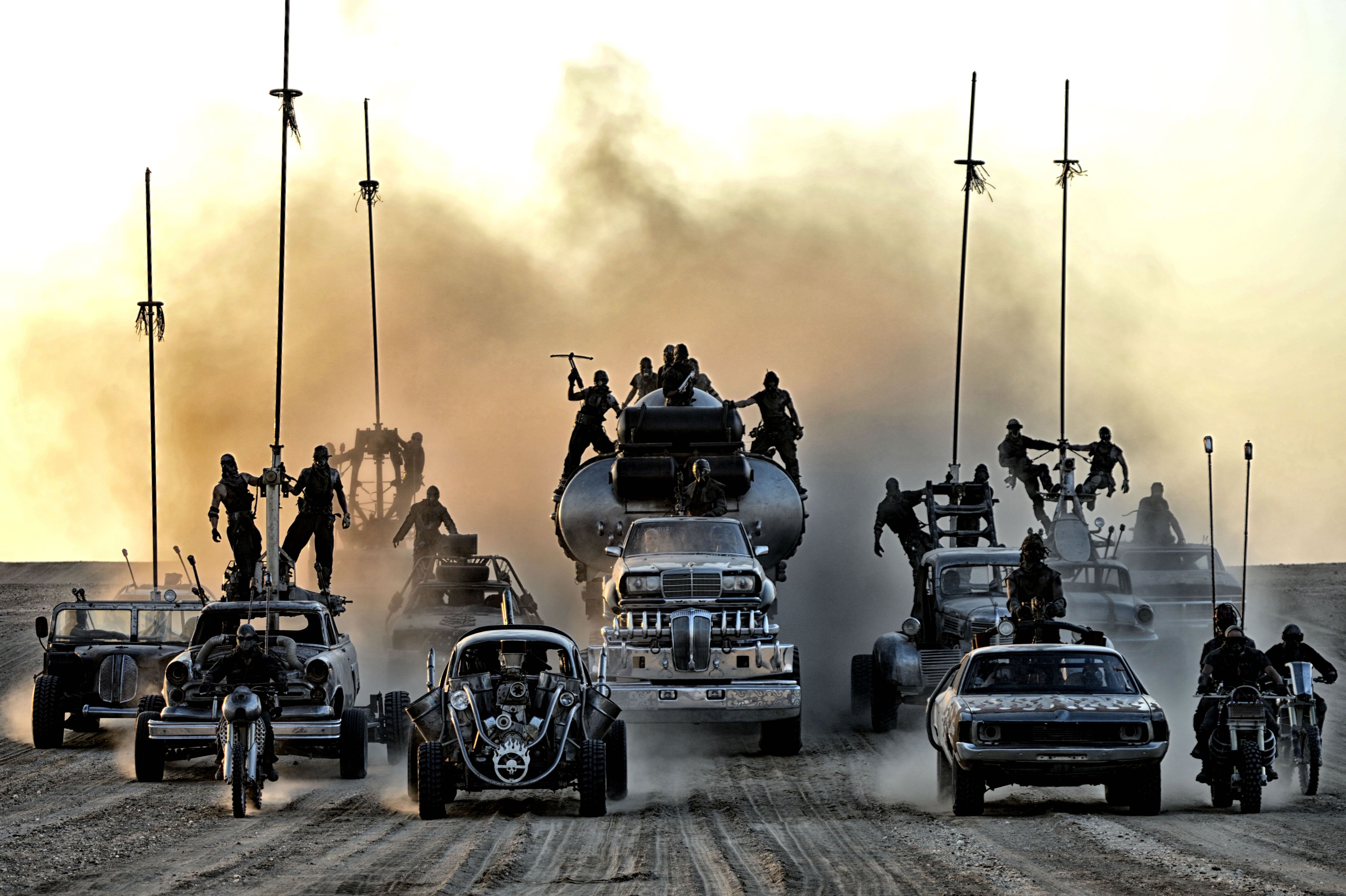
- Mad Max - I Am Legend - Terminator - The Hunger Games - The Blade Runner - The Matrix - 1984 - V for Vendetta

Themes in dystopia
- Control - Brainwashing - Government - Surveillance - Big Brother - Manipulation - Gangs